
316 SS vs B8M: What’s the Difference?
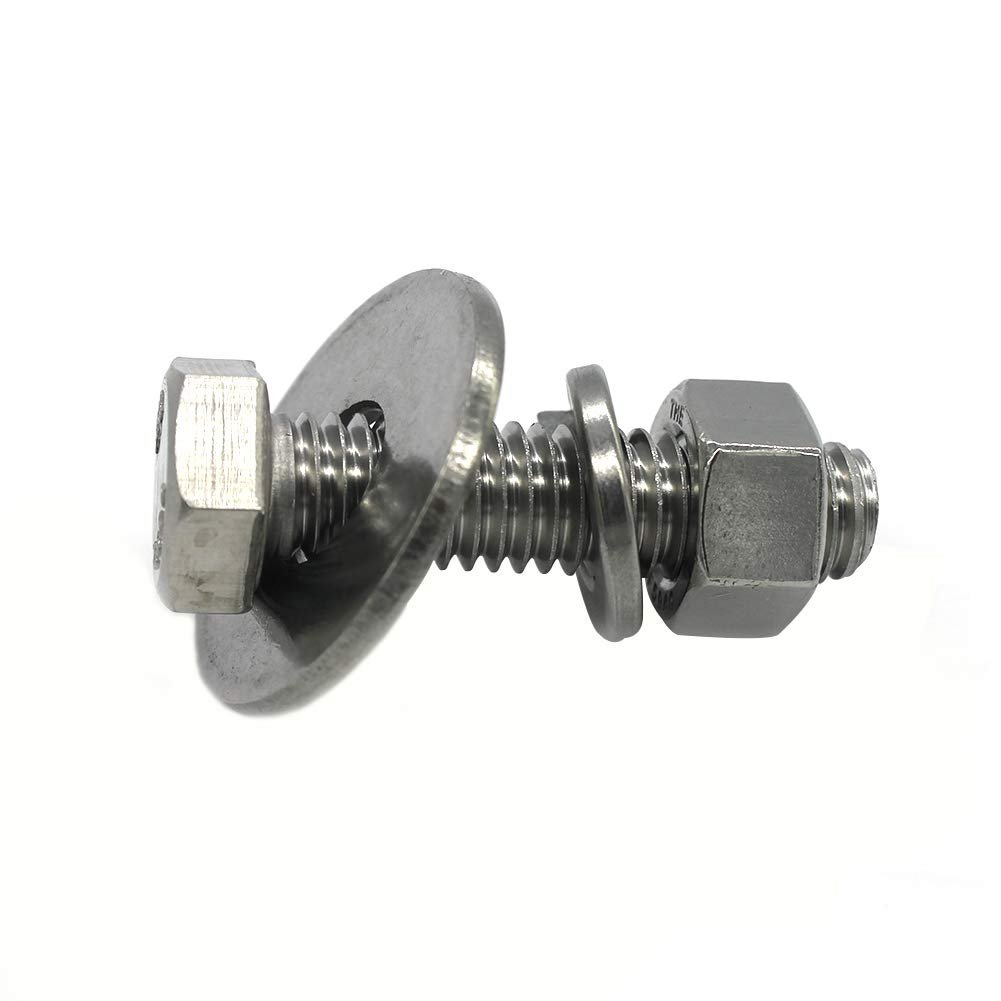
When choosing stainless steel for industrial projects, 316 SS and B8M are two commonly confused materials. While they share the same base chemistry, 316 SS is a structural alloy, and B8M is a high-strength fastener grade made from 316 stainless steel.
In this guide, we break down their chemical composition, mechanical properties, performance, standards, and best applications to help you select the right material for pressure vessels, flanges, piping, and fasteners.
1. What Is 316 SS (AISI 316 / ASTM A240)?
316 Stainless Steel is a molybdenum-bearing austenitic stainless steel known for excellent corrosion resistance, weldability, and versatility.
It is defined under ASTM A240 (plate/sheet) and ASTM A312 (pipe/tube).
Chemical Composition of 316 SS (WT%)
- Chromium (Cr): 16.00 – 18.50%
- Nickel (Ni): 10.00 – 14.00%
- Molybdenum (Mo): 2.00 – 3.00%
- Carbon (C): ≤ 0.08%
- Manganese (Mn): ≤ 2.00%
- Silicon (Si): ≤ 0.75%
- Phosphorus (P): ≤ 0.045%
- Sulfur (S): ≤ 0.030%
Mechanical Properties of 316 SS (Annealed Condition)
- Tensile Strength: ≥ 515 MPa (75 ksi)
- Yield Strength: ≥ 205 MPa (30 ksi)
- Elongation: ≥ 40%
- Hardness: ≤ 92 HRB
- Modulus of Elasticity: 193 GPa
- Max Operating Temperature: Up to 870°C (1600°F)
Key Features of 316 SS
- Superior pitting & crevice corrosion resistance
- Excellent formability & weldability
- Ideal for plates, pipes, tanks, sheets, fabrication
- Used in marine, chemical, food, pharmaceutical industries
2. What Is B8M (ASTM A193 Grade B8M)?
B8M is not an alloy grade — it is a fastener standard under ASTM A193 for high-temperature/high-pressure bolts, studs, and threaded rods.
B8M = heat-treated 316 stainless steel for critical fastener applications.
Chemical Composition of B8M (Same as 316 SS)
B8M uses the same chemistry as 316 SS but requires strict heat treatment:
- Chromium (Cr): 16.00 – 18.50%
- Nickel (Ni): 10.00 – 14.00%
- Molybdenum (Mo): 2.00 – 3.00%
- Carbon (C): ≤ 0.08%
- Solution Annealed: 1950°F (1065°C) minimum
Mechanical Properties of B8M (Class 1 / Class 2)
B8M Class 1 (Solution Treated)
- Tensile Strength: ≥ 515 MPa (75 ksi)
- Yield Strength: ≥ 205 MPa (30 ksi)
- Elongation: ≥ 30%
- Hardness: ≤ 92 HRB
B8M Class 2 (Strain Hardened)
- Tensile Strength: ≥ 760 MPa (110 ksi)
- Yield Strength: ≥ 655 MPa (95 ksi)
- Elongation: ≥ 15%
- Hardness: ≤ 35 HRC
Key Features of B8M
- High-strength fastener for pressure systems
- Used with flanges, valves, pressure vessels
- Complies with ASME B16.5 / B31.3
- Resists corrosion & galling in bolted joints
3. 316 SS vs B8M: Full Comparison Table
表格
| Item | 316 SS (ASTM A240/A312) | B8M (ASTM A193) |
|---|---|---|
| Type | Austenitic stainless steel alloy | High-strength fastener grade |
| Base Material | 316 stainless steel | 316 stainless steel |
| Standard | ASTM A240, A312, A276 | ASTM A193 Grade B8M |
| Carbon | ≤ 0.08% | ≤ 0.08% |
| Molybdenum | 2–3% | 2–3% |
| Tensile Strength | ≥ 515 MPa | Class 2: ≥ 760 MPa |
| Yield Strength | ≥ 205 MPa | Class 2: ≥ 655 MPa |
| Hardness | ≤ 92 HRB | Up to 35 HRC |
| Elongation | ≥ 40% | 15–30% |
| Heat Treatment | Annealed | Solution treated / strain hardened |
| Form | Plate, pipe, sheet, bar, tube | Bolt, stud, threaded rod |
| Application | Structural, fabrication, tanks, piping | Flange bolts, pressure vessel fasteners |
| Industry | General industrial, marine, food | Oil & gas, petrochemical, power |
4. Performance Differences: Strength, Corrosion & Temperature
Strength
- 316 SS: Medium strength, ductile, formable.
- B8M Class 2: 50% stronger than 316 SS, ideal for high-pressure joints.
Corrosion Resistance
Both have excellent resistance to:
- Chloride pitting corrosion
- Marine & chemical environments
- Crevice corrosion
But 316 SS is better for large fabricated parts, while B8M is optimized for bolted connections.
Temperature Resistance
- 316 SS: Continuous service up to 870°C (1600°F)
- B8M: Rated for high-temperature service up to 600°F (316°C) in pressure systems
5. When to Use 316 SS vs B8M?
Choose 316 SS When:
- You need sheets, plates, pipes, tubes, bars
- Fabrication, welding, bending, forming required
- Equipment: tanks, heat exchangers, marine parts
- Moderate pressure & temperature
- General industrial, food, pharma, water treatment
Choose B8M When:
- You need bolts, studs, threaded rods
- High-pressure flange connections (ASME B16.5)
- Pressure vessels, valves, pipelines
- Oil, gas, petrochemical, power plants
- High strength + corrosion resistance required
6. Final Conclusion
- 316 SS = versatile structural stainless steel
- B8M = high-strength 316 stainless fastener
They share the same corrosion resistance but differ in strength, heat treatment, form, and application.
For fabrication: use 316 SS.
For critical flange/valve bolts: use B8M.
Contact Us
📧 Email: info@shpipeindustry.com
📞 Phone: 0086-18837185745
🌐 Website: www.shpipeindustry.com