
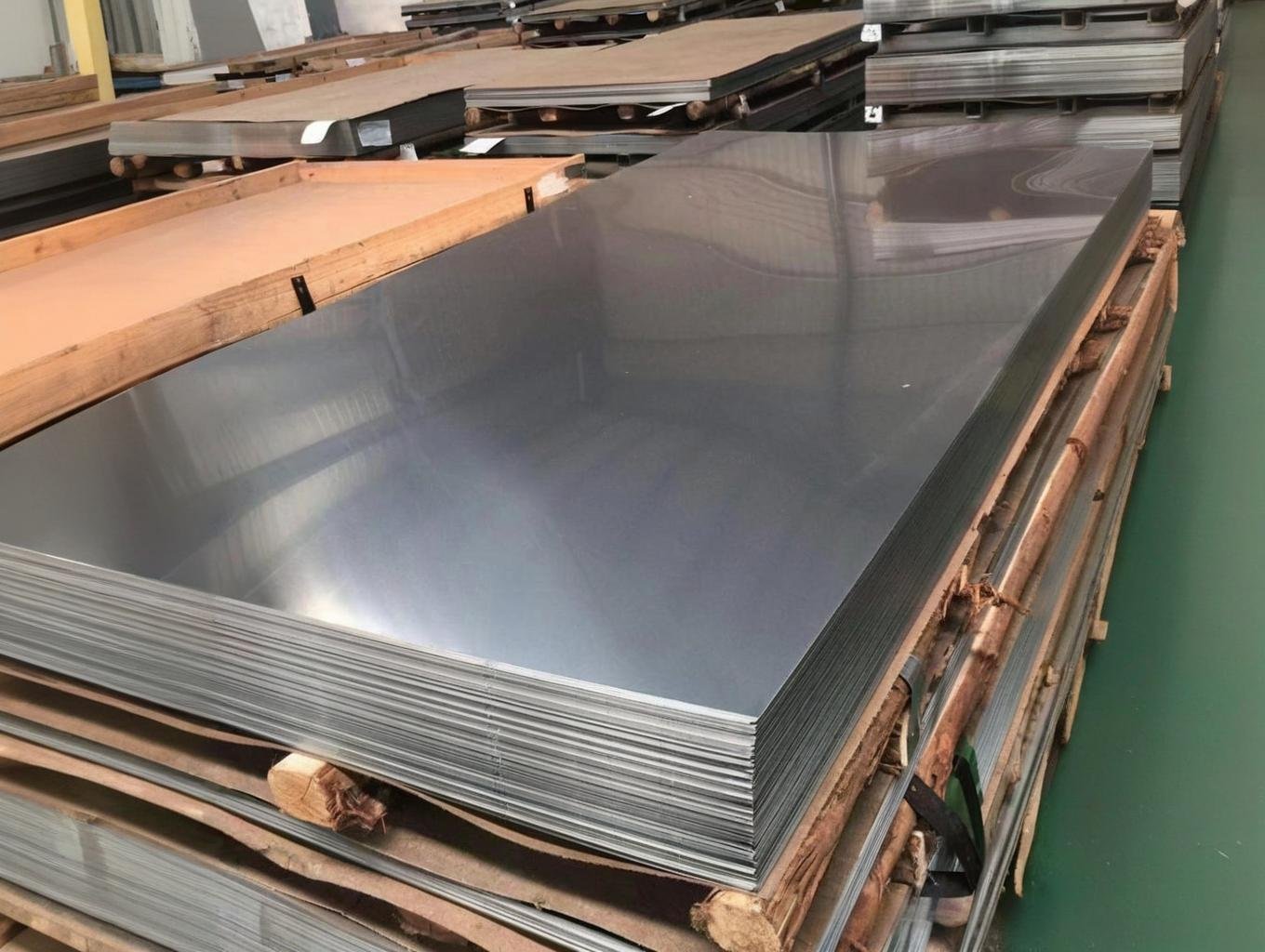
S31803 (also known as 2205 duplex stainless steel), a typical representative of austenitic-ferritic duplex structure, has become a core material in Indonesia’s tropical marine environment, resource development and infrastructure construction due to its precise alloy ratio and balanced performance. Its unique chemical composition endows it with excellent corrosion resistance and high strength, while its mechanical properties meet the requirements of harsh working conditions such as heavy loads and fatigue resistance, demonstrating irreplaceable application value in Indonesia’s oil and gas, marine engineering, chemical and other fields.
I. Core Parameters of S31803 Steel Plate: Chemical Composition and Function Analysis
The performance advantages of S31803 stem from its precise chemical composition design. Various elements work synergistically to balance corrosion resistance, strength and processability. The specific composition and functions are shown in the following table (complying with international standards such as ASTM A240 and DIN 1.4462):
| Element | Content Range (wt.%) | Core Function |
|---|---|---|
| Carbon (C) | ≤0.03 | Controls carbon content to reduce the risk of intergranular corrosion, ensures microstructural stability after welding, and is suitable for high-temperature corrosive environments in Indonesia’s chemical and oil and gas fields |
| Chromium (Cr) | 21.0~23.0 | Forms a dense chromium oxide passivation film, which is the core element for resistance to uniform corrosion and pitting corrosion, and copes with high salt spray and seawater immersion scenarios in Indonesia |
| Nickel (Ni) | 4.50~6.50 | Stabilizes the austenitic phase, improves material toughness and low-temperature impact performance, and avoids brittle fracture under the working conditions of Indonesia’s circum-Pacific seismic belt |
| Molybdenum (Mo) | 2.50~3.50 | Enhances tolerance to chloride ions, significantly improves resistance to crevice corrosion, and is suitable for high-chloride media in oil and gas transmission and seawater desalination |
| Nitrogen (N) | 0.14~0.20 | Replaces part of nickel to stabilize the austenitic phase, while increasing tensile strength and pitting corrosion resistance, and reducing material costs (compared with 316L) |
| Manganese (Mn) | ≤2.00 | Assists in deoxidation, improves hot workability, and meets the processing needs such as cutting and bending in local Indonesian factories |
| Silicon (Si) | ≤1.00 | Improves oxidation resistance, reduces oxidation loss under high-temperature working conditions, and is suitable for chemical reactors and heat exchangers |
| Phosphorus (P) | ≤0.03 | Strictly controls impurity content to avoid reducing material toughness and corrosion fatigue resistance |
| Sulfur (S) | ≤0.02 | Low sulfur content ensures welding performance, avoids hot cracks in welds, and is suitable for welding of large structures such as cross-sea bridges |
Key Characteristic Derivation: The “chromium-molybdenum-nitrogen” corrosion resistance system formed by about 22% chromium + about 3% molybdenum + about 0.18% nitrogen makes the annual corrosion rate of S31803 in 20% dilute sulfuric acid (below 60℃) <0.1mm, which is much better than 316L (annual corrosion rate of about 0.3~0.5mm), perfectly adapting to the high-salt coastal and high-acid chemical working conditions in Indonesia.
II. Mechanical Properties of S31803 Steel Plate: Data and Engineering Value
The mechanical properties of S31803 are significantly superior to traditional austenitic stainless steels (such as 316L and 304), especially in strength and fatigue resistance, which can meet the needs of heavy-load and dynamic load scenarios in Indonesia. The specific performance parameters and engineering significance are as follows:
1. Core Mechanical Performance Indicators (After Solution Annealing, Complying with ASTM A240 Standard)
| Performance Indicator | Value Range | Comparative Advantage (vs 316L Austenitic Stainless Steel) |
|---|---|---|
| Tensile Strength (σb) | ≥620MPa (up to 795MPa for some) | 30%~50% higher than 316L, capable of withstanding higher working pressure |
| Yield Strength (σ₀.₂) | ≥450MPa (up to 550MPa for some) | 1.5~2 times that of 316L, supporting lightweight structural design |
| Elongation (δ₅) | ≥25% (up to 30% for some) | Close to 316L, ensuring plastic deformation capacity during processing |
| Hardness (HB) | 230~290HB | Higher than 316L (180~220HB), improving wear resistance, suitable for mineral slurry erosion scenarios in the mining industry |
| Corrosion Fatigue Strength | 1.2~1.4 times that of 316L | Withstands dynamic loads such as marine wave impact and equipment vibration, extending the service life of Indonesian port machinery and wind power equipment |
| Thermal Expansion Coefficient | 12.8×10⁻⁶/℃ (20~100℃) | Lower than 316L (16.0×10⁻⁶/℃), better dimensional stability under thermal cycle conditions, suitable for chemical heat exchangers |
| Thermal Conductivity | 15.1W/(m·K) (20℃) | Higher than 316L (14.0W/(m·K)), improving heat dissipation efficiency and avoiding local overheating of equipment |
2. Embodiment of Engineering Value of Mechanical Properties
- Lightweight Design: With a yield strength twice that of 316L, in structures such as cross-sea bridges and offshore wind power towers in Indonesia, the thickness of steel plates can be reduced by 30%~50%, lowering transportation and installation costs (Indonesia has many islands and high logistics costs);
- Fatigue Resistance and Durability: High tensile strength and corrosion fatigue resistance enable S31803 to have a service life of 15~20 years in Indonesian offshore drilling platforms (withstanding wave impact) and mining ball mills (high-frequency vibration), which is 3~4 times that of ordinary carbon steel;
- Processing Adaptability: With an elongation of ≥25%, it supports cold forming (such as bending and cutting) and welding (adapting to processes such as GTAW and GMAW), meeting the customized processing needs of equipment components in local Indonesian factories. After welding, solution annealing at 1900°F (1040℃) can restore the balance of the duplex structure and avoid performance degradation.
III. Core Application Scenarios of S31803 Steel Plate in Indonesia
Combined with Indonesia’s characteristics of “tropical marine climate + resource-based economy + infrastructure demand”, the performance advantages of S31803 are highly compatible with local scenarios. The specific applications are as follows:
(I) Oil and Gas Resource Development: Dual Rigidity for Corrosion Resistance and High Strength
Indonesia is a major oil and gas country in Southeast Asia. Offshore oil and gas fields around Sumatra Island and Kalimantan Island account for 70% of the country’s reserves. The working conditions are characterized by “seawater immersion + sulfur-containing oil and gas + high pressure”:
- Offshore Drilling Platforms: 10~20mm thick S31803 steel plates are used to manufacture deck supports, guardrails and mud transmission pipelines. The chromium-molybdenum-nitrogen system resists corrosion from seawater salt spray and hydrogen sulfide in oil and gas. A yield strength of ≥450MPa can withstand the dynamic loads of the platform and avoid structural deformation;
- Oil and Gas Transmission Pipelines: Used for transmission pipelines from the coast to inland (specifications Φ200~Φ800mm). Compared with 316L pipelines, S31803 can reduce the wall thickness from 12mm to 8mm, reducing the material cost per kilometer by 25%. At the same time, it resists corrosion from chlorinated salt water (oil and gas produced water) and reduces the risk of perforation and leakage;
- Wellhead Equipment: Forged S31803 steel plates are used for Christmas trees and valve bodies. A tensile strength of ≥620MPa adapts to wellhead pressures of 10~15MPa, and corrosion resistance ensures continuous service in sulfur-containing oil and gas for more than 5 years without rust.
(II) Marine Engineering and Port Facilities: Scene Adaptability for Salt Spray Resistance and Impact Resistance
Indonesia consists of more than 17,000 islands with a total coastline of 54,000 kilometers. Port construction and cross-sea transportation are the focus of infrastructure, which need to cope with the working conditions of “high salt spray + tidal impact + typhoons”:
- Port Terminal Equipment: Anti-collision fenders (20~30mm thick) and bollards of container terminals adopt S31803 steel plates. The resistance to seawater immersion corrosion enables a service life of 18~20 years (only 3~5 years for ordinary carbon steel), and a hardness of 230~290HB can resist wear from container collisions;
- Cross-sea Bridges: Pier protection plates and anti-collision guardrails adopt S31803. The low thermal expansion coefficient (12.8×10⁻⁶/℃) can reduce structural stress caused by temperature changes, adapting to the high temperature (35~40℃ during the day) and night temperature difference in Indonesia. At the same time, it resists seawater penetration corrosion and improves the seismic safety of bridges (circum-Pacific seismic belt);
- Offshore Vessels: The hull shells (8~12mm thick) of offshore operating vessels (fishing boats, patrol boats) adopt S31803, which resists seawater corrosion and wave impact, avoids hull leakage caused by rust of traditional steel, and extends the ship maintenance cycle to 3~4 years (originally 1~2 years).
(III) Chemical Industry and Seawater Desalination: Corrosion Resistance Solutions for High-Acid and High-Chloride Environments
Indonesia has laid out a number of coastal chemical parks on Java Island and Sumatra Island, and some islands are short of fresh water resources, so the demand for seawater desalination is urgent. The working conditions are characterized by “high-acid/high-chloride media”:
- Chemical Equipment: Reactor shells (16~25mm thick) and heat exchanger tubes adopt S31803. In acid-base media such as sulfuric acid and hydrochloric acid, the annual corrosion rate is <0.1mm, much lower than 0.3mm of 316L, adapting to the production of chemical fertilizers and petrochemical derivatives;
- Seawater Desalination Projects: Pretreatment filter tanks and reverse osmosis membrane support structures adopt S31803, which resists corrosion of seawater (chloride ion content of about 19,000mg/L), ensuring the equipment produces 3,000~5,000 tons of water per day, operating continuously without failure, and reducing water production costs by 8%~10%;
- Chemical Wastewater Treatment: High-salt wastewater transmission pipelines (Φ100~Φ300mm) adopt S31803, which resists erosion of organic wastewater with COD (Chemical Oxygen Demand) ≥5,000mg/L, complying with Indonesia’s new environmental protection discharge regulations (wastewater discharge COD ≤500mg/L).
(IV) Mining and Food Processing: Dual Adaptability for Wear Resistance and Sanitary Grade
- Mining Processing: Nickel and copper ore beneficiation equipment (ball mill liners 15~20mm thick, flotation cell bodies) adopt S31803. A hardness of 230~290HB resists wear from mineral slurry erosion, and at the same time resists corrosion of wastewater containing heavy metal ions (such as nickel ions), improving beneficiation efficiency by 15%~20%;
- Food Processing: Palm oil pressing equipment and food storage tanks adopt S31803. The low-carbon (≤0.03%) and low-impurity characteristics meet food hygiene standards (FDA certification), resist corrosion of palm oil at high temperatures (120~140℃), and avoid metal ion leaching to contaminate food.
IV. Key Notes in Indonesian Applications: Processing and Standard Adaptability
- Heat Treatment and Welding Control: Under the high-temperature and high-humidity environment in Indonesia, S31803 needs to be solution annealed at above 1900°F (1040℃) and water-quenched after welding to avoid precipitation of intermetallic phases (such as σ phase) in the range of 1300~1800°F, which leads to decreased corrosion resistance; it is recommended to use ER2209 welding wire to ensure that the weld seam is consistent with the base metal performance.
- Standard Compliance: Most Indonesian government projects require materials to comply with ASTM A240 (American standard) or SNI (Indonesian National Standard). When purchasing, a Material Test Certificate (MTC) should be provided, specifying chemical composition and mechanical performance test data, to avoid project rework due to non-compliance with standards.
- Localized Processing Adaptability: Core cities such as Jakarta and Surabaya in Indonesia have the capability of S31803 cutting and bending. It is recommended to prioritize local processing (such as cutting 20mm thick steel plates into customized sizes) to shorten the delivery cycle (15~20 days shorter than imported finished products) and reduce transportation losses (prone to collisions during island transportation).
Conclusion
The chemical composition (chromium-molybdenum-nitrogen corrosion resistance system) and mechanical properties (high strength, fatigue resistance) of S31803 steel plate accurately match the working conditions of “high salt and humidity, heavy load, and multiple corrosive media” in Indonesia. From offshore oil and gas platforms to cross-sea bridges, from chemical equipment to seawater desalination projects, S31803 not only solves the pain points of traditional steel such as easy rust and insufficient strength, but also reduces engineering costs through lightweight design. With the advancement of Indonesia’s national plans such as “New Capital Construction” and “Marine Economic Corridor”, the application scale of S31803 in large-scale infrastructure and resource development projects will continue to expand, becoming a key material supporting local industrial upgrading.
Contact us today to get customized S31803 project’s needs, and let our expertise drive your success in one of the world’s most dynamic industrial markets.
Contact Info:Email: info@shpipeindustry.com
Phone: 0086-18837185745
Website: www.shpipeindustry.com