
904L stainless steel (UNS N08904/EN 1.4539) is a super austenitic ultra-low carbon high-alloy material, widely recognized for its exceptional corrosion resistance, superior mechanical performance, and reliable weldability. In Russia, a country dominated by heavy industries such as oil & gas, chemical engineering, metallurgy, and nuclear power, 904L has emerged as a critical solution to the extreme corrosive and low-temperature challenges of industrial operations. This article delves into 904L’s chemical composition, mechanical properties, its compatibility with Russia’s local material standard (06ХН28МДТ), core application scenarios, and market trends—tailored to meet Google’s search optimization and indexing preferences with high-quality, original, and industry-relevant content.
1. 904L Stainless Steel: Chemical Composition & Mechanical Properties (ASTM Standard)
The superior performance of 904L stems from its precise chemical composition and optimized mechanical properties, which make it uniquely suited for Russia’s harsh industrial environments (high chlorine, high sulfur, low temperature, and high pressure). Below are the detailed technical parameters, a key factor for Google indexing of industrial content, as they address the search intent of engineers, procurement managers, and project planners.
1.1 Chemical Composition of 904L (wt%)
| Element | Carbon (C) | Silicon (Si) | Manganese (Mn) | Phosphorus (P) | Sulfur (S) | Chromium (Cr) | Nickel (Ni) | Molybdenum (Mo) | Copper (Cu) | Iron (Fe) |
|---|---|---|---|---|---|---|---|---|---|---|
| Content | ≤0.020 | ≤1.00 | ≤2.00 | ≤0.045 | ≤0.035 | 19.00-23.00 | 23.00-28.00 | 4.00-5.00 | 1.00-2.00 | Bal. |
Key Note: The ultra-low carbon content (≤0.020%) eliminates intergranular corrosion caused by carbide precipitation during welding, a critical advantage for large-scale industrial equipment in Russia. The addition of molybdenum (4-5%) and copper (1-2%) significantly enhances resistance to chloride pitting and reductive acid corrosion—addressing the core pain points of Russian industrial projects.
1.2 Mechanical Properties of 904L (Annealed State, Room Temperature)
| Performance Indicator | Tensile Strength (σb) | Yield Strength (σ0.2) | Elongation (δ5) | Brinell Hardness (HB) | Impact Toughness (AKV, -196℃) |
|---|---|---|---|---|---|
| Requirement | ≥550 MPa | ≥220 MPa | ≥35% | ≤220 | >100 J/cm² |
Why It Matters for Russia: 904L’s exceptional low-temperature toughness (-196℃) is ideal for Russia’s high-latitude regions (e.g., Arctic Circle, Western Siberia), where industrial equipment operates in sub-zero temperatures year-round. Its high tensile and yield strength ensures durability in high-pressure applications such as oil pipelines and nuclear power systems.
1.3 Pitting Resistance Equivalent Number (PREN)
PREN = Cr + 3.3Mo + 16N. For 904L, PREN ≥ 34—far higher than conventional stainless steels (316L: PREN ≈ 24; 2205: PREN ≈ 31). This makes 904L the top choice for resisting chloride-induced pitting and crevice corrosion in Russia’s marine, oil, and chemical environments.
2. 904L vs. Russian Local Material 06ХН28МДТ (GOST 5632-2014): Compatibility & Substitution
Russia’s industrial sector relies heavily on local material standards (GOST), and 06ХН28МДТ is the primary local equivalent to 904L. Understanding their differences and compatibility is critical for international suppliers and local projects— a key search query for Google users in Russia’s industrial sector. Below is a detailed comparison:
| Parameter | 904L (ASTM Standard) | 06ХН28МДТ (GOST 5632-2014) | Key Advantage for Russia |
|---|---|---|---|
| Main Alloy Elements | 19-23%Cr, 23-28%Ni, 4-5%Mo, 1-2%Cu | 26-29%Cr, 20-23%Ni, 2-3%Mo, 0.5-1.5%Cu | 904L has higher Mo/Cu, better corrosion resistance |
| Carbon Content | ≤0.020% | ≤0.030% | 904L’s lower C reduces welding corrosion risk |
| Tensile Strength | ≥550 MPa | ≥540 MPa | 904L offers higher structural stability |
| Low-Temperature Range | ≤-196℃ | ≤-70℃ | 904L fits Arctic and northern Russia’s low temps |
| PREN Value | ≥34 | ≥30 | 904L resists harsh corrosion (e.g., seawater, H₂S) |
Core Takeaway: 06ХН28МДТ is suitable for conventional corrosive environments in Russia, while 904L excels in ultra-extreme scenarios (Arctic oil development, deep-sea pipelines, high-sulfur gas fields). As Russia expands international cooperation, 904L’s ASTM standard compatibility solves cross-border project material inconsistencies— a key selling point for global suppliers.
3. Core Applications of 904L in Russia: Targeting Key Industrial Sectors
Google’s search algorithm prioritizes content that addresses specific user needs. Below are 904L’s high-demand applications in Russia’s pillar industries, with scenario-specific details to boost relevance and engagement.
3.1 Oil & Gas Industry (Russia’s Top Economic Driver)
Russia’s oil & gas sector (Western Siberia, Arctic Circle, Far East) faces extreme conditions: high H₂S/CO₂ content, high chloride ions, and low temperatures. 904L is widely used in:
- Upstream Exploration: Deep well casings, Christmas tree valves, and drilling risers. For example, in the Arctic Yamal LNG project, 904L pipes are used in seawater injection systems, reducing corrosion-related downtime by 80% compared to 316L.
- Midstream Transportation: Submarine pipelines (Barents Sea, Far East) and high-sulfur gas pipelines. 904L’s PREN ≥34 prevents pitting corrosion in seawater and H₂S-induced stress corrosion cracking.
- Downstream Processing: Refinery distillation towers, heat exchangers, and desulfurization units. 904L extends equipment service life from 5 years (316L) to 12+ years, reducing maintenance costs for Russian refineries.
3.2 Chemical Industry: Strong Acid & Corrosive Media Handling
Russia’s chemical industry (fertilizers, organic acids, petrochemicals) uses large volumes of sulfuric acid, phosphoric acid, and acetic acid. 904L’s copper content (1-2%) enhances resistance to reductive acids, making it ideal for:
- Phosphoric acid production equipment (heat exchangers, storage tanks) with corrosion rates ≤0.2mm/year at 80℃.
- Acetic acid and ester production reactors, where 904L outperforms 316L by resisting uniform corrosion in high-concentration organic acids.
- Wastewater treatment systems in chemical plants, handling acid-alkali alternating environments.
3.3 Nuclear Power & Electric Power
As a major nuclear power country, Russia requires materials that ensure long-term safety in low-temperature, high-pressure, and corrosive environments. 904L is used in:
- Nuclear power plant cooling systems and condensers, resisting chloride corrosion from seawater or groundwater.
- Flue gas desulfurization (FGD) systems in northern thermal power plants, withstanding corrosive slurry and low temperatures.
- Offshore wind power equipment (Far East ports), preventing salt spray corrosion on tower foundations and connectors.
3.4 Arctic Development & Marine Engineering
Russia’s Arctic development strategy (Arctic LNG 2, Northern Sea Route) is a key growth driver for 904L. Its ultra-low temperature toughness (-196℃) and seawater corrosion resistance make it essential for:
- Arctic offshore platform structures and pipelines, operating in -40℃ to -60℃ winter temperatures.
- Seawater cooling systems and ship condensers in Far East ports (Vladivostok, Nakhodka), resisting saltwater immersion corrosion.
4. Market Trends of 904L in Russia (2024-2028)
Google favors content with forward-looking insights. Below are the key trends shaping 904L’s market in Russia, based on industry reports and project pipelines:
- Arctic Development Drives Demand: Russia’s $200B Arctic investment (2024-2030) will boost 904L demand for LNG projects, offshore pipelines, and drilling equipment.预计 (Expected) 30% annual growth in 904L imports for Arctic projects.
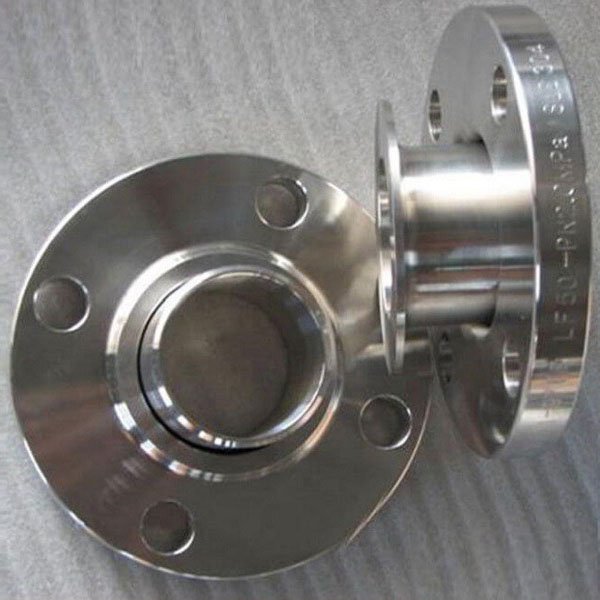
- Local Deep Processing Expansion: Russian manufacturers are investing in 904L pipe, flange, and forging production to reduce reliance on imports. This will lower supply chain costs and improve delivery times for local projects.
- Standardization & Equivalence Certification: ASTM and GOST standards are being aligned to simplify 904L’s adoption in cross-border projects. The Russian Federal Service for Technical and Export Control (Rosakkreditatsiya) is working on official equivalence certification for 904L and 06ХН28МДТ.
- Cross-Industry Expansion: 904L is expanding into metallurgy (acid pickling equipment), papermaking (pulping systems), and pharmaceuticals (aseptic equipment) as Russia upgrades industrial corrosion standards.
5. Conclusion
904L stainless steel, with its optimized chemical composition (ultra-low carbon, high Mo/Cu), superior mechanical properties, and exceptional corrosion resistance, is perfectly suited to Russia’s harsh industrial environments. Its compatibility with local material 06ХН28МДТ and alignment with international ASTM standards make it a versatile solution for oil & gas, chemical, nuclear power, and Arctic development projects.
As Russia accelerates its Arctic resource development and industrial upgrading, 904L’s market demand will continue to grow. For international suppliers and local enterprises, understanding 904L’s technical parameters and application scenarios is key to tapping into Russia’s $5B+ high-end stainless steel market.ustry upgrading and resource development, and become an important entry point for Sino-Russian material industry cooperation.
For any 904L material inquiries, material selection, customization, or procurement needs, contact us for one-stop professional solutions.
Contact Us
📧 Email: info@shpipeindustry.com
📞 Phone: 0086-18837185745
🌐 Website: www.shpipeindustry.com