
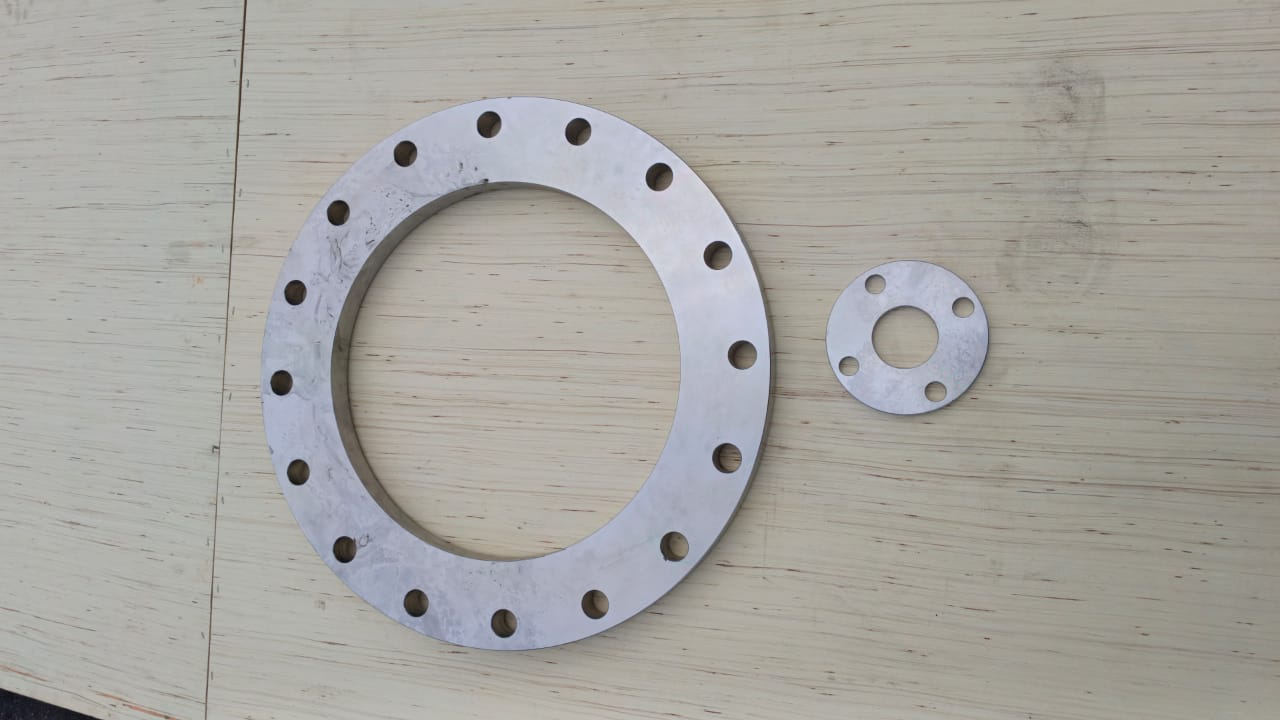
A backing ring flange is a critical component of lap joint flange systems in industrial pipeline engineering, widely used in petroleum, chemical, marine engineering, and water treatment industries. Paired with stub ends, it enables flexible pipeline connection, solving bolt hole alignment and disassembly challenges in high-pressure, corrosive, and frequently maintained environments. As a key pressure-bearing part, its quality, installation, and maintenance directly impact pipeline sealing and operational safety.
Industry safety data shows over 60% of lap joint flange-related pipeline leaks and pressure failures stem from improper backing ring flange selection, installation defects, or lack of standardized maintenance. Common hazards include sealing surface corrosion, excessive inner hole wear, bolt hole deformation, and material performance degradation. This guide focuses on the widely used ANSI B16.5 Class 150 backing ring flange, covering its application features, installation tips, maintenance standards, and material selection to help engineers and maintenance personnel ensure long-term pipeline stability.
What is a Backing Ring Flange? (ANSI B16.5 Standard)
Also called a lap joint flange ring, a backing ring flange is a key accessory for lap joint flange systems. Unlike integral welded flanges, it is not directly welded to the pipeline but fits over the stub end (which is welded to the pipeline). This design delivers unique advantages for industrial pipelines:
- Flexible Installation & Maintenance: Rotates freely on the stub end for easy bolt hole alignment, reducing installation difficulty for large-diameter, high-precision pipelines and improving maintenance efficiency.
- Cost-Effective for Harsh Conditions: For corrosive media (seawater, chemical acids/alkalis), stub ends can use high-corrosion-resistant materials (SMO254, Duplex 2205, SS316), while backing ring flanges are selected based on actual pressure to optimize material costs.
- Adapts to Changing Conditions: Ideal for pipelines with frequent temperature changes and slight displacement, reducing stress concentration from thermal expansion and contraction.
- Standardized Compatibility: ANSI B16.5 unifies dimensional parameters (outer diameter, inner hole size, bolt circle diameter, bolt hole count, thickness) for various calibers (2″, 12″, 14″, 20″, etc.), ensuring interchangeability across manufacturers.
ANSI B16.5 backing ring flanges are available in pressure classes like Class 150, 300, and 600. Class 150 (≈2.0MPa working pressure) is most common for general industrial pipelines, paired with Sch. 20S, Sch. 40S stub ends.
Key Installation Tips for Backing Ring Flange (Avoid Common Defects)
Proper installation is critical for lap joint flange system sealing and safety. Follow these ANSI B16.5-aligned steps to avoid leaks, deformation, and pressure failure:
- Precise Stub End & Flange Matching: Ensure the backing ring flange’s inner hole fits the stub end’s outer diameter (per ANSI B16.5 tolerances) with no excessive gap or interference. Keep the FF (flat face) sealing surface clean, smooth, and free of scratches, burrs, or corrosion pits.
- Standardized Assembly: Slide the backing ring flange over the welded stub end, place a gasket between the two flanges, and tighten bolts diagonally evenly to ensure uniform sealing surface pressure (avoid over-tightening or under-tightening).
- Match Caliber & Pressure Class: Never mix flanges of different calibers, pressure classes, or standards (e.g., ANSI B16.5 vs. GB). Use auxiliary positioning tools for large-diameter flanges (e.g., 20″ Duplex 2205) to ensure pipeline-flange coaxiality.
- Post-Welding Inspection: Before installing the backing ring flange, check the stub end-pipeline weld for cracks, incomplete penetration, or slag inclusion. Polish the weld to avoid scratching the flange’s inner hole or restricting rotation.
Backing Ring Flange Maintenance & Inspection Standards
Long-term operation exposes backing ring flanges to corrosion, wear, and stress fatigue. Standardized maintenance extends service life and eliminates hazards. Below are guidelines for SS316, Duplex 2205, and SMO254 flanges:
Daily Inspection (On-Site Personnel)
- Check for visible corrosion, deformation, or damage (focus on sealing surfaces and bolt connections).
- Inspect for medium leaks (oil stains, water marks, or gas traces on gaskets/sealing surfaces).
- Ensure bolts are tight; address loosening, thread corrosion, or missing nuts promptly.
Regular Maintenance (Monthly/Quarterly, Adjust by Condition)
- Sealing Surface Care: Clean with a non-abrasive tool to remove scale and dust; polish minor scratches with fine sandpaper to maintain flatness.
- Corrosion Protection: Apply anti-corrosion grease to non-sealing surfaces and bolts in humid, marine, or chemical environments.
- Matching Surface Check: Clear corrosion/scale buildup to prevent jamming; apply high-temperature or anti-corrosion grease if needed.
Overhaul Inspection (Annual/Bi-Annual, During Pipeline Shutdown)
- Dimensional Testing: Verify inner hole diameter, sealing surface flatness, and bolt hole position per ANSI B16.5; replace if deformed.
- Material Performance Check: Conduct non-destructive testing (NDT) for internal cracks or fatigue in high-temperature/high-pressure/corrosive environments.
- Replace Worn Parts: Fully replace flanges with severe corrosion, excessive wear, or irreparable deformation; replace worn stub ends synchronously.
Backing Ring Flange Material Selection Guide
Material selection depends on working conditions and compatibility with stub ends (core principle: match or use lower-grade material than the stub end, never higher). Mainstream materials include:
- SS316 Stainless Steel: Ideal for general corrosive media (ordinary chemical, urban water treatment) with excellent corrosion resistance and cost-effectiveness. Best for Class 150 low-medium pressure pipelines (e.g., 12″ SS316 ANSI B16.5 Class 150).
- Duplex 2205: High strength, stress corrosion resistance, and pitting resistance. Preferred for harsh conditions (oil/gas, seawater desalination) and large-caliber flanges (2″, 14″, 20″).
- SMO254 Super Austenitic Stainless Steel: Ultra-high molybdenum/nitrogen content for extreme corrosion (acids, chlorides). Suitable for chemical pickling and deep-sea marine pipelines.
Lubrication Requirements for Backing Ring Flange
Proper lubrication ensures free rotation and prevents corrosion/jamming. Adjust cycle and lubricant based on working conditions:
- Lubrication Area: Backing ring flange’s inner hole and stub end’s outer surface.
- Lubrication Cycle: Monthly (general indoor/low-dust); bi-weekly (heavy load/high-dust/outdoor); weekly (marine/humid).
- Lubricant Selection: No. 3 lithium-based grease (above 100℃); No. 2 lithium-based grease (below 0℃); calcium-based grease (marine/humid); anti-corrosion grease (chemical environments).
Conclusion
As a core component of ANSI B16.5-compliant lap joint flange systems, backing ring flanges are essential for flexible, safe industrial pipeline operation. Their value depends on standardized material selection, precise installation, and regular maintenance. For special specifications (e.g., 20″ large-diameter, SMO254 high-corrosion), use equipment manuals and professional experience to create personalized maintenance plans.
About Us – Backing Ring Flange Manufacturer
As an experienced backing ring flange manufacturer, we adhere to ANSI B16.5 and other international standards, delivering high-quality, customized products with mature craftsmanship and strict quality control.
We offer a full range of materials, including stainless steel (SS316), duplex steel (Duplex 2205), and nickel-based alloy steel. We also provide customized solutions for large-caliber (2″, 12″, 14″, 20″, etc.) and special corrosion-resistant working conditions to meet your diverse needs.
For any backing ring flange inquiries, material selection, customization, or procurement needs, contact us for one-stop professional solutions.
Contact Us
📧 Email: info@shpipeindustry.com
📞 Phone: 0086-18837185745
🌐 Website: www.shpipeindustry.com