
When selecting stainless steel materials for industrial applications, understanding the distinction between 316 SS and B8M is crucial for ensuring operational safety and cost-effectiveness. While both belong to the stainless steel family, their unique formulations, performance characteristics, and intended uses set them apart significantly.
Material Essence: From Alloy to Fastener Standard
316 SS (AISI 316) is a widely recognized austenitic stainless steel alloy celebrated for its exceptional corrosion resistance. Its chemical composition—16-18% chromium, 10-14% nickel, and 2-3% molybdenum—forms a protective oxide layer that excels in resisting pitting and crevice corrosion, especially in chloride-rich environments like marine or chemical processing settings. As a general-purpose alloy, 316 SS complies with ASTM A240 standards, making it versatile for fabricating tanks, pipes, and structural components.
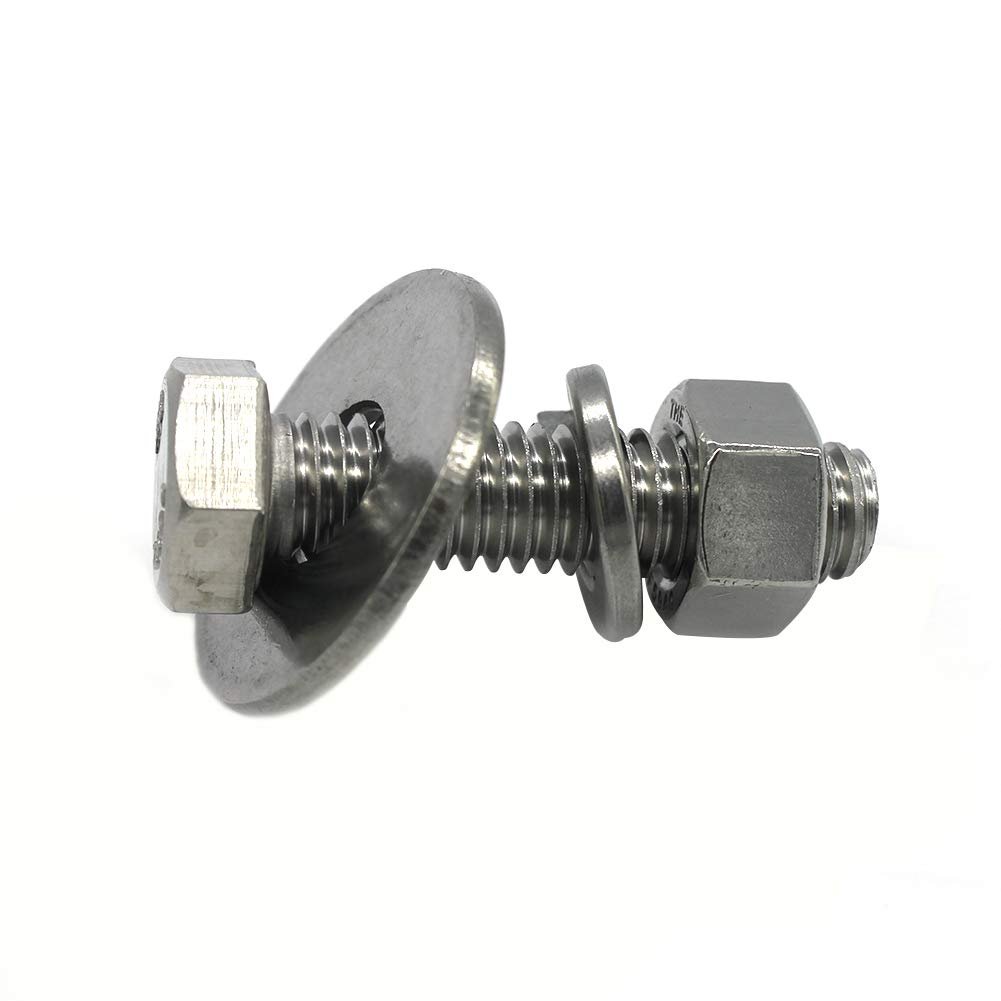
B8M, by contrast, refers specifically to ASTM A193 Grade B8M, a high-performance fastener specification based on 316 stainless steel. It represents a heat-treated fastener grade engineered for high-pressure and high-temperature service. While sharing the same core chemistry as 316 SS (including 2-3% molybdenum), B8M undergoes rigorous carbide solution treatment and optional strain hardening to meet stringent mechanical property requirements for bolts, studs, and threaded rods in critical applications like pressure vessels and flanges.
Performance Distinctions: Strength vs. Versatility
The mechanical properties of B8M and 316 SS diverge significantly due to their processing methods:
- Tensile Strength: B8M Class 2 fasteners achieve a minimum tensile strength of 760 MPa (110 ksi) through strain hardening, making them 50% stronger than annealed 316 SS, which typically ranges from 515-620 MPa. This strength makes B8M ideal for high-pressure flange connections in oil and gas facilities.
- Hardness: B8M Class 2 reaches a maximum hardness of 35 HRC, far exceeding 316 SS’s typical 92 HRB. However, this comes with reduced ductility, as B8M Class 2 elongation (15-30%) is lower than 316 SS’s 40%+.
- Temperature Resistance: B8M maintains structural integrity up to 600°F (316°C) in high-pressure service, approved for critical applications like nuclear valves, while 316 SS performs reliably in ambient to moderate temperatures.
In corrosion resistance, both materials excel in chloride environments, but their applications differ. 316 SS shines in static equipment like chemical reactors and food processing machinery, where long-term exposure to corrosive fluids demands uniform resistance. B8M, meanwhile, is optimized for dynamic fastener applications, resisting galling through specialized surface treatments while maintaining corrosion resilience in pipeline joints.
Application Guidelines: Choosing the Right Material
- Select 316 SS when:
- Fabricating tanks, heat exchangers, or marine components
- Prioritizing weldability and formability for complex shapes
- Operating in moderate temperature/pressure environments (e.g., pharmaceutical equipment)
- Choose B8M when:
- Securing pressure vessels, valves, or high-pressure flanges (per ASME B16.5)
- Requiring high tensile strength with corrosion resistance
- Working in oil, gas, or petrochemical industries with extreme pressure cycling
Conclusion: Matching Material to Mission
316 SS and B8M are not competitors but complementary solutions. 316 SS serves as a versatile workhorse for structural and static applications, while B8M delivers specialized performance as a high-strength fastener in critical systems. By aligning their unique properties with operational demands—whether corrosion resistance, mechanical strength, or temperature tolerance—engineers can ensure long-term reliability and safety.
For technical specifications or certification verification, refer to ASTM A240 (316 SS) and ASTM A193 (B8M) standards, or consult with material suppliers for application-specific recommendations.