
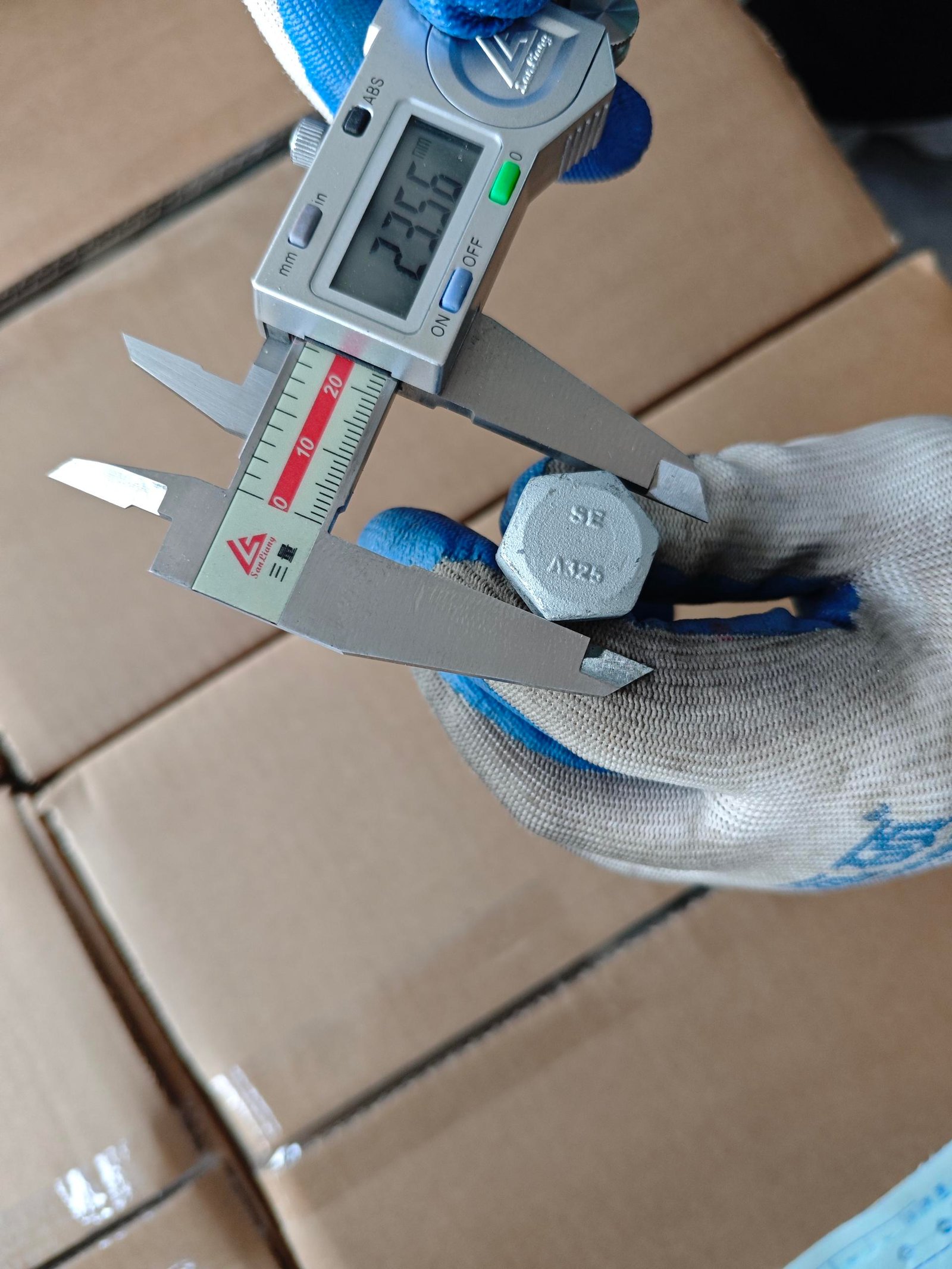
ASTM A325 bolts are iconic high-strength fasteners widely used in structural steel connections, renowned for their reliability, standardized performance, and versatility in construction and engineering projects. Though formally integrated into ASTM F3125/F3125M in 2016, the “A325” designation remains the industry’s go-to reference for heavy hex structural bolts, reflecting its enduring legacy in ensuring structural integrity. Below is a comprehensive guide to ASTM A325’s specifications, materials, performance, and practical applications—optimized for clarity and technical accuracy.
Core Specifications & Material Composition
ASTM A325 Type 1, 2, and 3: What’s the Difference?
The ASTM A325 standard is divided into three types, primarily differentiated by their chemical composition and corrosion resistance. Choosing the correct type is essential for the longevity and safety of the structure.
- Type 1: This is the standard, most common version of A325 bolts. It is made from medium carbon steel and is suitable for general use where atmospheric corrosion is not a primary concern. For most indoor or non-aggressive environments, Type 1 is the default choice.
- Type 2: Type 2 bolts are made from low carbon, martensitic steel and are intended for use with weathering steel (like ASTM A588). They are designed to develop a protective patina similar to the connected steel, providing better long-term corrosion resistance in exposed outdoor applications. (Note: The production of Type 2 has become less common).
- Type 3: These bolts are made from weathering steel with a specific chemical composition (including elements like nickel, copper, and chromium) that provides a high level of atmospheric corrosion resistance. Type 3 is the preferred choice for uncoated structures in severe environments, such as coastal areas or industrial settings.
Chemical Composition
The chemical makeup of ASTM A325 bolts varies by type and tensile strength grade, with strict limits on impurities to ensure mechanical performance and durability:
| Element | Type 1 (120 ksi) | Type 1 (150 ksi) | Type 3 (120 ksi, Comp A) | Type 3 (120 ksi, Comp B) | Type 3 (120 ksi, Index) | Type 3 (150 ksi, Index) |
|---|---|---|---|---|---|---|
| Carbon (C) | 0.30 – 0.52% | 0.30 – 0.48%0.35–0.53% for 1-1/2” A490/150ksi bolts | 0.33 – 0.40% | 0.38 – 0.48% | 0.30 – 0.52% | 0.30 – 0.53% |
| Manganese (Mn) | 0.60% min | 0.60% min | 0.90 – 1.20% | 0.70 – 0.90% | 0.60% min | 0.60% min |
| Phosphorus (P) | 0.035% max | 0.035% max | 0.035% max | 0.035% max | 0.035% max | 0.035% max |
| Sulfur (S) | 0.040% max | 0.040% max | 0.040% max | 0.040% max | 0.040% max | 0.040% max |
| Silicon (Si) | 0.15 – 0.30% | – | 0.15 – 0.30% | 0.30 – 0.50% | – | – |
| Boron (B) | 0.003% max | 0.003% max | – | – | – | – |
| Copper (Cu) | – | – | 0.25 – 0.45% | 0.20 – 0.40% | 0.20 – 0.60% | 0.20 – 0.60% |
| Nickel (Ni) | – | – | 0.25 – 0.45% | 0.50 – 0.80% | 0.20% min* | 0.20% min* |
| Chromium (Cr) | – | – | 0.45 – 0.65% | 0.50 – 0.80% | 0.20% min | 0.20% min |
| Molybdenum (Mo) | – | – | – | 0.06% max | 0.10% min* | 0.10% min* |
Note: For Type 3 bolts, either Nickel (Ni) or Molybdenum (Mo) must be present in the specified minimum amount. Corrosion resistance is verified per ASTM Guide G101.
Mechanical Properties
ASTM A325 bolts are defined by rigorous strength requirements, with tensile strength varying slightly by diameter:
| Dimension Range | Minimum Tensile Strength | Minimum Yield Strength | Elongation (min) | Reduction in Area (min) |
|---|---|---|---|---|
| ½” to 1” (imperial) | 120 ksi (830 MPa) | 92 ksi (635 MPa) | 14% | 35% |
| 1⅛” to 1½” (imperial) | 105 ksi (724 MPa) | 81 ksi (559 MPa) | 14% | 35% |
| M12 to M36 (metric) | 830 MPa | 660 MPa | 14% | 35% |
Core hardness ranges from Rockwell C24–35, ensuring a balance of strength and ductility for withstanding dynamic loads and installation torque. Unlike higher-strength alternatives, A325 bolts maintain compatibility with hot-dip galvanization (HDG) for corrosion protection, though galvanized variants require rotational capacity testing to verify installation performance.
Compatible Hardware & Installation Guidelines
Recommended Components
ASTM A325 bolts require matching high-strength hardware to maintain structural integrity:
- Nuts: ASTM A563 Grade D, DH, or C; ASTM A194 Grade 2H is an acceptable substitute.
- Washers: ASTM F436 hardened washers (Type 1 or 3) to distribute clamping force and prevent bearing damage. Load-indicating washers (LID) or direct tension indicating (DTI) washers (per ASTM F959) are recommended for verifying proper tension during installation.
- Type 3 Compatibility: Use ASTM A563 Grade DH3 or C3 nuts and F436 Type 3 washers for corrosion resistance matching.
Installation Best Practices
- Hole Sizing: Use standard or oversized holes per structural joint specifications to ensure proper fit without compromising load capacity.
- Torque Requirements: Follow project-specific torque values or use DTI washers to achieve recommended tension (typically 70–80% of yield strength).
- Environmental Considerations: Avoid installing in extreme temperatures; galvanized bolts should be inspected for zinc coating integrity before use.
- Prohibition: Never reuse ASTM A325 bolts—they are designed for single-use in structural connections.
Applications & Industry Use Cases
ASTM A325 bolts are the workhorse of structural engineering, trusted in:
- Commercial and industrial buildings (steel framing, beam-to-column connections).
- Highway and railway bridges (decking, truss assemblies).
- Heavy machinery and equipment installations.
- Marine and coastal structures (when using Type 3 or galvanized Type 1).
Their versatility stems from a balance of strength, cost-effectiveness, and corrosion resistance options. Unlike ASTM A490 bolts (alloy steel, 150 ksi tensile strength), A325’s medium carbon composition allows galvanization—making it preferred for outdoor or corrosive environments where A490’s hydrogen embrittlement risk (from galvanization) is a concern.
ASTM A325 vs. ASTM F3125: Key Notes
While ASTM A325 was formally superseded by ASTM F3125 (which consolidates A325, A490, and other structural bolt grades), the A325 name remains universally recognized in specifications and procurement. Critical differences include:
- ASTM F3125 Grade A325 maintains identical mechanical properties for all diameters (120 ksi minimum tensile strength), whereas the original A325 reduced strength for sizes over 1”.
- F3125 standardizes coating options, including zinc-aluminum (Geomet) finishes for enhanced corrosion resistance.
For project compliance, verify whether specifications reference the original ASTM A325 or ASTM F3125 Grade A325—both are interchangeable in most applications.
Frequently Asked Questions (FAQs)
- What sizes are available for ASTM A325 bolts?Imperial diameters range from ½” to 1½”, with lengths starting at 1¼” (shorter 1” lengths are custom-order only due to manufacturing constraints). Metric sizes span M12 to M36.
- If no type is specified, which A325 variant is supplied?Suppliers may provide either Type 1 or Type 3 unless specified. Always request material test reports (MTRs) to confirm the type delivered.
- Can ASTM A325 be used as all-thread rod?No—ASTM A325 applies only to headed structural bolts. For all-thread applications, specify ASTM F3125 Grade A325T or ASTM A354 BD.
- How does A325 compare to A490?A325 uses medium carbon steel (120 ksi tensile) and allows galvanization; A490 uses alloy steel (150–173 ksi tensile) but cannot be galvanized. A490 is preferred for high-load applications, while A325 excels in corrosive or general-purpose use.
Conclusion
ASTM A325 bolts remain the gold standard for structural steel connections, combining standardized performance, material versatility, and compatibility with corrosion protection methods. Whether specified under the original ASTM A325 or integrated ASTM F3125 Grade A325, these bolts deliver the strength and reliability critical for safe, long-lasting structures. For project-specific guidance, consult the engineer of record to confirm size, type, and hardware compatibility.