
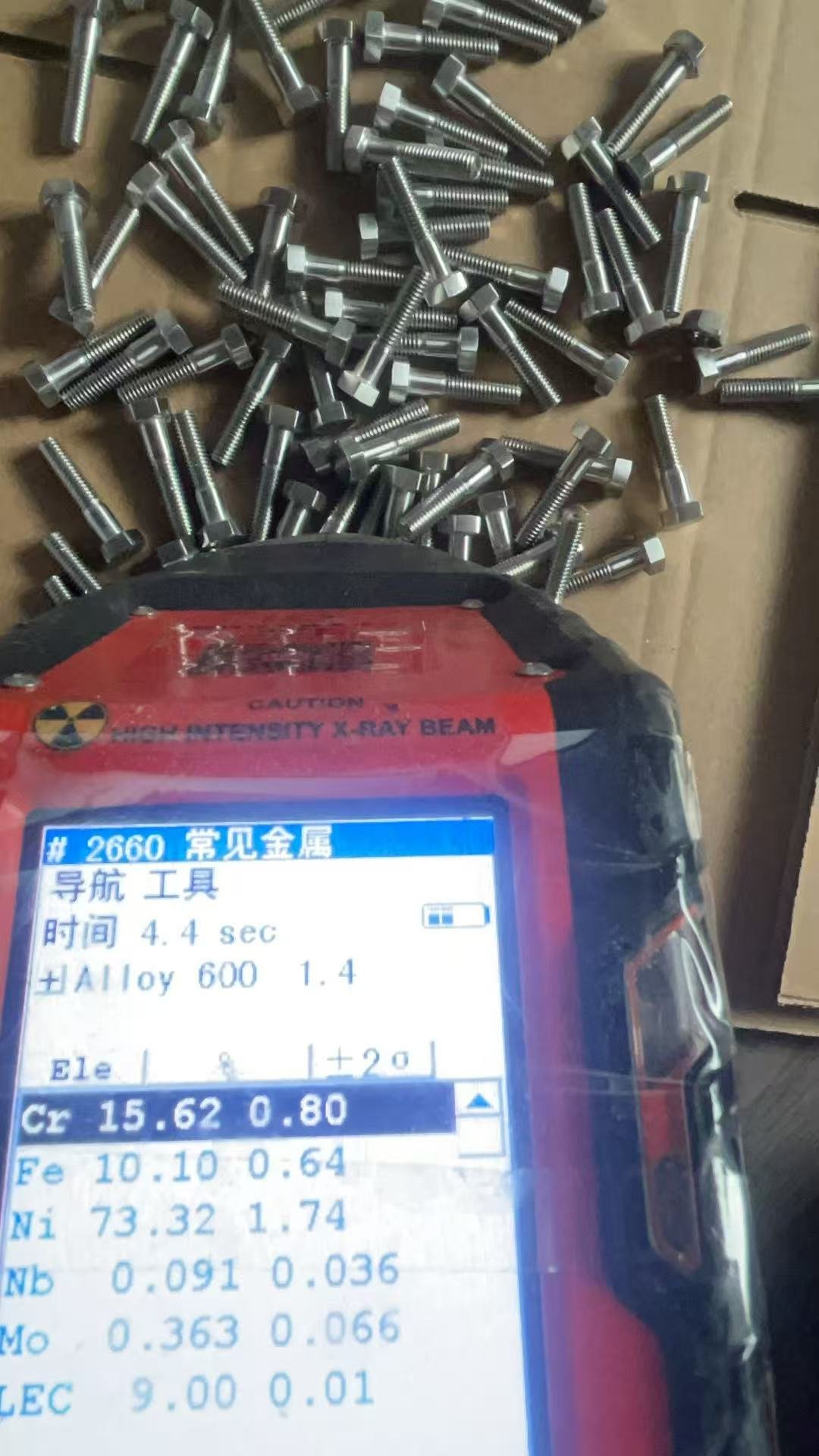

1. Overview and Key Advantages of Inconel 600 Alloy
Inconel 600 (UNS N06600 / W.Nr. 2.4816) is a solid-solution strengthened nickel-chromium-iron alloy. Its high nickel content grants outstanding resistance to chloride stress corrosion cracking, while the chromium component provides excellent oxidation resistance at elevated temperatures.
The primary advantages of using Inconel 600 for fasteners include:
- Excellent High-Temperature Strength: Maintains high mechanical strength and resists oxidation in temperatures up to 1175°C (2150°F), making it ideal for boilers, heat treatment fixtures, and gas turbines.
- Superior Corrosion Resistance: Demonstrates strong resistance to a wide range of corrosive media, including organic and inorganic acids, alkaline solutions, and water. It is particularly effective against caustic corrosion and chloride-induced stress corrosion cracking.
- High Strength and Fabricability: Can be cold-worked to achieve high strength levels suitable for heavy-duty fastening. It offers good machinability and formability compared to other nickel superalloys.
2. Detailed Technical Parameters of Inconel 600 for Fasteners
2.1 Chemical Composition (Weight %)
The chemical composition is the foundation of the alloy’s properties. The standard composition range for Inconel 600 is as follows:
| Element | Standard Range (wt%) | Key Role & Effect |
|---|---|---|
| Nickel (Ni) | 72.0 min | Base element; provides the austenitic structure, ensuring high-temperature strength and corrosion resistance. |
| Chromium (Cr) | 14.0 – 17.0 | Forms a protective chromium oxide layer, granting oxidation and corrosion resistance. |
| Iron (Fe) | 6.0 – 10.0 | Provides solid-solution strengthening and stabilizes the austenitic structure. |
| Carbon (C) | 0.15 max | A strengthening element; high content can reduce intergranular corrosion resistance. |
| Manganese (Mn) | 1.0 max | Acts as a deoxidizer during melting and improves hot-working properties. |
| Copper (Cu) | 0.5 max | Typically a residual element; kept low to avoid unwanted effects. |
| Silicon (Si) | 0.5 max | Acts as a deoxidizer; high levels can reduce ductility. |
| Sulfur (S) | 0.015 max | A harmful impurity; controlled to minimize hot shortness (embrittlement at high temps). |
2.2 Room Temperature Mechanical Properties
The mechanical properties of the raw material determine the final strength grade of the fastener. Inconel 600 is supplied in various conditions (annealed, solution annealed, cold-worked) to meet different specifications.
| Mechanical Property | Annealed Condition (Typical) | Solution Annealed (per ASTM B166) | Cold-Worked / High-Strength (e.g., ASTM A193 B8M Class 2) |
|---|---|---|---|
| Tensile Strength | ≥ 550 MPa (80 ksi) | ≥ 655 MPa (95 ksi) | ≥ 860 MPa (125 ksi) |
| Yield Strength (0.2% Offset) | ≥ 240 MPa (35 ksi) | ≥ 310 MPa (45 ksi) | ≥ 690 MPa (100 ksi) |
| Elongation (in 50mm) | ≥ 30% | ≥ 30% | ≥ 12% |
| Hardness | ≤ 90 HRB | – | 96 HRB Max |
Application Insight:
- Annealed/Solution Annealed: Used for standard fasteners where good ductility and formability are required.
- Cold-Worked (e.g., B8M Class 2): Specifically for high-strength bolting applications requiring higher clamp load and resistance to stress relaxation at elevated temperatures.
2.3 Elevated Temperature Mechanical Properties
The true value of Inconel 600 fasteners is revealed at high temperatures, where they retain a significant portion of their strength.
| Temperature | Tensile Strength (Typical, MPa) | Yield Strength (0.2% Offset, Typical, MPa) |
|---|---|---|
| 21°C (70°F) | 655 | 310 |
| 200°C (400°F) | 620 | 270 |
| 400°C (750°F) | 600 | 240 |
| 600°C (1110°F) | 570 | 220 |
| 800°C (1470°F) | 330 | 170 |
Note: Values are typical and can vary based on heat lot and processing history.
Key Takeaway: Inconel 600 retains approximately 85% of its room temperature tensile strength at 600°C, a performance level unattainable for standard stainless steels.
3. Common Applications of Inconel 600 Fasteners
Due to its robust properties, Inconel 600 is specified for critical fastening in these industries:
- Aerospace: Engine components, combustion chamber assemblies.
- Power Generation: Studs and nuts for gas turbines, nuclear reactor internals (e.g., reactor vessel studs), boiler supports, and heat exchangers.
- Chemical & Petrochemical Processing: Fasteners for reactors, pressure vessels, and piping systems exposed to high temperatures and corrosive chemicals.
- Heat Treating Industry: Furnace fixtures, radiant tubes, and retort assemblies.
4. Selection and Handling Considerations
- Galling Tendency: Like many nickel alloys, Inconel 600 has a tendency to gall (cold-weld) during tightening. The use of anti-seize lubricants specifically designed for high-temperature stainless steels and nickel alloys is strongly recommended.
- Nut Compatibility: Nuts should be made from a material of equal or higher strength grade to prevent thread stripping. Inconel 600 nuts or those made from similar alloys (like Inconel 718 for higher strength) are ideal.
- Torque Considerations: For high-strength cold-worked fasteners, proper torque procedures must be followed to achieve the correct preload without overstressing the bolt. Consider using calibrated torque wrenches or hydraulic tensioning tools.
Conclusion
Inconel 600 fasteners are an engineering solution for extreme environments. Their unique combination of high-temperature strength, oxidation resistance, and corrosion resistance, backed by the detailed parameters provided, makes them a reliable choice for critical applications. When your project involves elevated temperatures, high pressures, or aggressive corrosives, specifying Inconel 600 fasteners ensures long-term reliability and safety.