
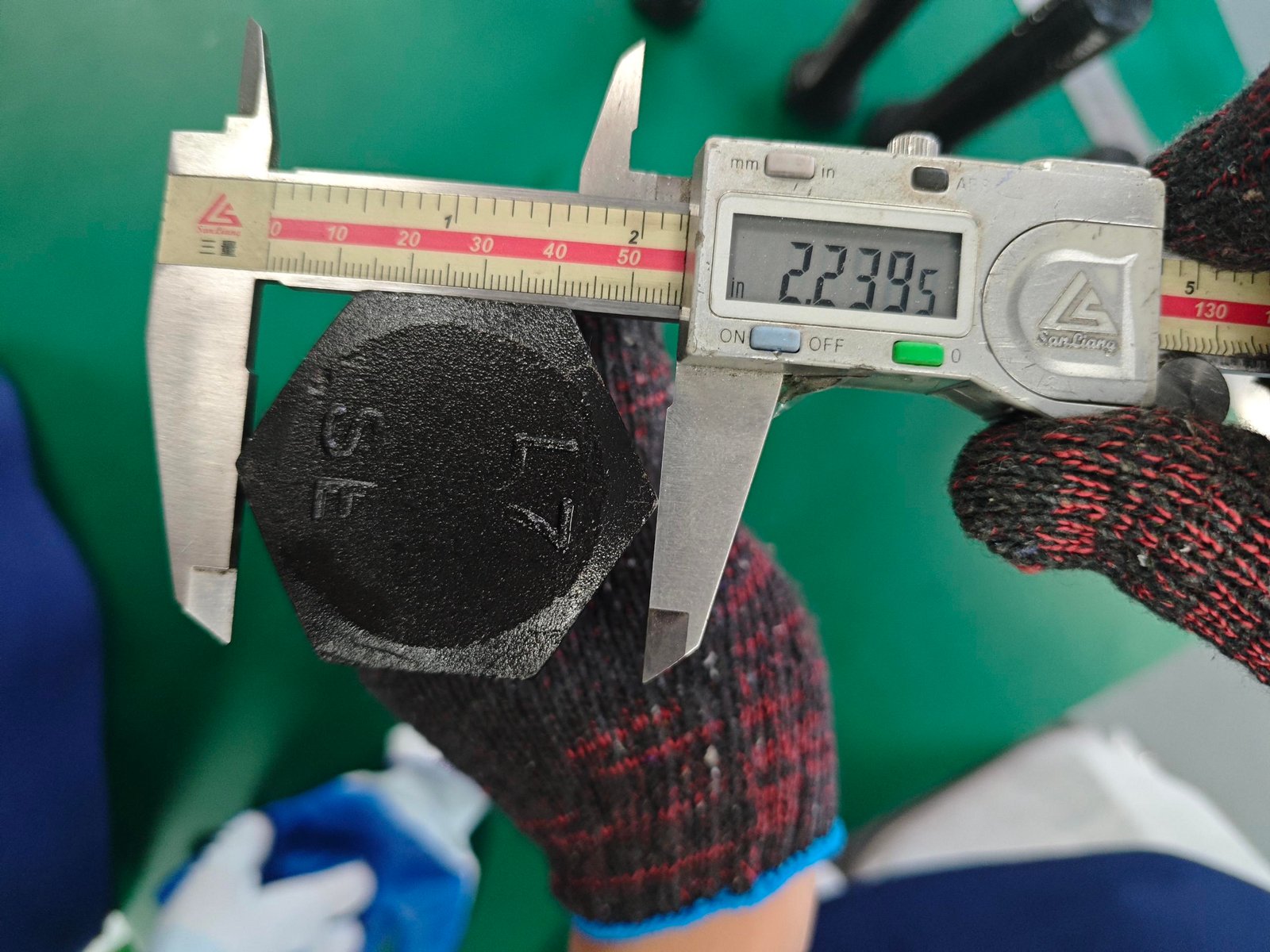
In the world of high-stakes industrial operations – from oil & gas pipelines and chemical processing plants to power generation facilities and structural applications – the integrity of every connection is paramount. Selecting the right fastener material isn’t just about specifications; it’s about safety, reliability, and long-term performance under extreme conditions. Two heavyweights dominate critical service bolting: ASTM A320 Grade B7 and ASTM A320 Grade L7. While both belong to the same standard for alloy steel bolting for low-temperature service, their distinct compositions and properties make them suited for different environments. Understanding the B7 vs. L7 difference is crucial for optimal performance and safety.
ASTM A320 B7: The High-Strength Workhorse for Elevated Temperatures
Grade B7 is the ubiquitous choice for high-strength bolting in demanding applications, particularly where elevated temperatures are a primary concern. Its robust strength profile makes it indispensable for flanges, valves, pressure vessels, and other critical components operating well above ambient conditions.
- Superior High-Temperature Strength: Retains its impressive tensile and yield strength significantly better than L7 at temperatures typically encountered in refinery and petrochemical service (up to 1000°F / 538°C).
- High Room Temperature Strength: Offers excellent strength for general high-pressure applications even at ambient temperatures.
- Cost-Effectiveness: Generally more readily available and cost-effective than L7 for high-temperature applications where its specific advantages are needed.
- Common Applications: Pressure vessels, heat exchangers, steam lines, valves, flanges (especially for high-temp hydrocarbon service).
ASTM A320 L7: The Cryogenic Champion for Extreme Cold
Grade L7 is specifically engineered to excel where temperatures plunge far below zero. Its enhanced toughness and impact resistance at cryogenic temperatures make it the material of choice for applications involving liquefied gases and arctic environments.
- Exceptional Low-Temperature Toughness: Features significantly higher Charpy Impact values at cryogenic temperatures (down to -150°F / -101°C) compared to B7. This resistance to brittle fracture is critical for safety.
- Optimized Composition: Achieves its cryogenic performance through tighter compositional control and specific heat treatment, often resulting in a lower maximum hardness than B7.
- Essential for Cryogenic Service: Mandatory for bolting in LNG facilities, liquid nitrogen/oxygen systems, ethylene plants, and any equipment handling extremely cold fluids.
- Common Applications: LNG storage tanks & piping, cryogenic valves & pumps, air separation units, arctic pipelines & structures.
B7 vs. L7: The Critical Comparison
| Feature | ASTM A320 Grade B7 | ASTM A320 Grade L7 | Key Distinction |
|---|---|---|---|
| Primary Design Focus | High Strength, Elevated Temperature Service | High Toughness, Low/Cryogenic Temperature Service | **B7: High Temp Strength |
| Key Service Range | -50°F to +1000°F (-45°C to +538°C) | -150°F to +800°F (-101°C to +427°C) | B7 excels above ~400°F, L7 excels below ~-50°F |
| Tensile Strength (min) | 125 ksi (860 MPa) | 115 ksi (795 MPa) / 105 ksi (725 MPa)^1 | B7 generally has higher strength at RT & elevated |
| Yield Strength (min) | 105 ksi (725 MPa) | 95 ksi (655 MPa) / 85 ksi (585 MPa)^1 | B7 has higher yield strength |
| Charpy V-Notch Impact (min) | 15 ft-lb @ -150°F (20 J @ -101°C)^2 | 20 ft-lb @ -150°F (27 J @ -101°C) | L7 has significantly superior toughness at cryo temps |
| Hardness (max) | HRC 35 | HRC 32 (Class 1) / HRC 26 (Class 1A)^1) | L7 often has a lower max hardness for better toughness |
| Core Composition | Medium Carbon Alloy Steel (Cr-Mo) | Medium Carbon Alloy Steel (Cr-Mo), tighter controls & specific heat treat | L7 optimized for low temp ductility |
| Cost & Availability | Generally more available & lower cost | Often higher cost due to specialized processing | B7 more economical for high-temp apps |
| Typical Applications | Refineries, Power Gen, High-Temp Valves/Vessels | LNG, Cryogenic Plants, Arctic Equipment, LPG | Match environment (Temp!) to material strength/toughness |
Notes:
- ^1 L7 has two classes: Class 1 (115/95 ksi min) and Class 1A (105/85 ksi min). Class 1A is specifically required for improved toughness in critical cryogenic service.
- ^2 B7 only requires impact testing down to -150°F if specified by the purchaser; L7 requires it down to -150°F and achieves higher minimum values.
Choosing the Right Material for Your Critical Service
The choice between A320 B7 and L7 hinges entirely on the operating temperature and the critical failure mode:
- Prioritize B7 When:
- Your application involves sustained temperatures above approximately 400°F (200°C).
- Maximum tensile and yield strength at elevated temperatures is the primary design driver.
- Service temperatures rarely dip below -50°F (-45°C) and cryogenic toughness is not the main concern.
- Cost-effectiveness for high-temperature service is important.
- Prioritize L7 When:
- Your application involves temperatures below -50°F (-45°C), especially down to cryogenic levels (-150°F/-101°C).
- Resistance to brittle fracture (impact toughness) at low temperatures is absolutely critical for safety.
- The service involves liquefied natural gas (LNG), liquid nitrogen/oxygen, ethylene, or arctic conditions.
- The specification mandates L7 (often Class 1A) for the specific low-temperature service.