
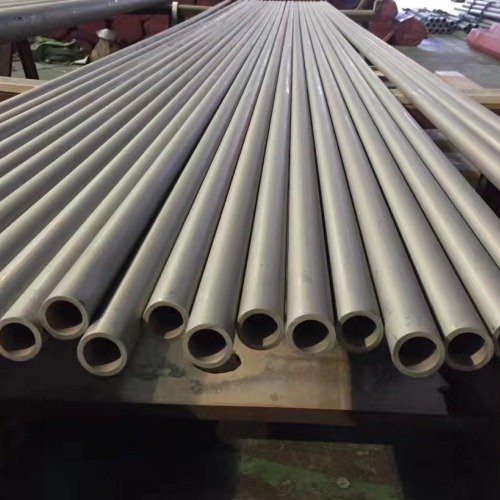
Titanium Grade 2 (UNS R50400) is a commercially pure titanium alloy (minimum 99% titanium) renowned for its balance of ductility, corrosion resistance, and versatility across industries. Below, we explore its unique traits, applications, and processing guidelines.
1. Commercially Pure Titanium: What Makes Grade 2 Unique?
Titanium Grades 1–4 are all commercially pure (CP) titanium, with minor chemical composition variations that impact:
- Mechanical properties (e.g., strength, ductility).
- Design capabilities for engineering applications.
Key advantages of Titanium Grade 2 include:
- Corrosion resistance similar to other CP titanium grades.
- Lightweight nature (lower density than many metals).
- Superior ductility and formability, making it the go-to choice for most industrial uses requiring corrosion resistance and workability.
2. Titanium Grade 2: Industries & Key Applications
Titanium Grade 2’s low density and robust properties make it essential in industries where weight, strength, and corrosion resistance intersect:
Core Industries
- Aerospace: For components where weight reduction and durability are critical.
- Medical: In implants and surgical instruments (biocompatible and corrosion-resistant).
- Marine: For parts exposed to seawater (excellent resistance to saltwater corrosion).
- Chemical Processing & Desalination: In reactors, vessels, and piping handling corrosive fluids.
Typical Applications
- Oil & gas components (valves, connectors).
- Reaction/pressure vessels and heat exchangers.
- Tubing, piping systems, and liners.
- Flue-gas desulphurization systems.
- Industrial components for continuous service up to 800°F (intermittent service up to 1000°F).
3. Corrosion Resistance of Titanium Grade 2
Titanium’s corrosion resistance comes from a protective oxide film that forms when exposed to oxygen. For Grade 2 specifically:
Resistant Environments
- Oxidizing, neutral, and inhibited reducing environments.
- Mildly reducing environments.
- Seawater and marine atmospheric conditions (excellent resistance).
- Moist chlorides, metallic chlorides, chlorite/hypochlorite solutions.
- Nitric acid, chromic acid, and organic acids.
- Many gaseous industrial processes.
Comparison to Other CP Grades
All 4 CP titanium grades (1–4) offer similar corrosion resistance, but mechanical properties differ based on variations in oxygen and iron content. Grade 2 strikes a balance for most industrial use cases.
4. Fabrication & Heat Treatment Guidelines for Titanium Grade 2
Titanium Grade 2’s ductility enables versatile processing. Here’s how to work with it:
Cold Forming
- For material thinner than 0.070″: Minimum bend radius = 2× material thickness (2T).
- For material thicker than 0.070″: Minimum bend radius = 2.5× material thickness (2.5T).
Machining, Hot Working, & Welding
- Machining: Easily machined with standard techniques.
- Hot Working: Perform between 400°F–600°F.
- Welding:
- Methods: MIG, TIG (inert gas shielding is critical to prevent oxygen pickup/embrittlement).
- Shielding gas: Argon/helium mixture (test weld procedures before full production).
- Preheat/post heat: Not required.
Heat Treatment
- Stress Relieving: Heat to 900°F–1100°F, then cool via forced air or slow cooling.
- Annealing: Heat to 1200°F–1400°F for 6 minutes to 2 hours, then air cool.
Optimization for Google Crawling & Ranking
- Structured Headings: Use
<h2>/<h3>tags to organize content (e.g., “Commercially Pure Titanium: What Makes Grade 2 Unique?”), so Google easily parses section hierarchy. - Keyword Integration: Naturally include terms like “Titanium Grade 2”, “UNS R50400”, “corrosion resistance”, and “industrial applications” in headings and body text.
- Readability: Short paragraphs, bullet points, and clear subsections improve user experience (a factor Google considers for rankings).
- Technical Clarity: Balance industry jargon (e.g., “commercially pure,” “inert gas shielding”) with plain-language explanations to suit both experts and search engines.
- Multimedia Potential (optional): Add diagrams or infographics (e.g., “Titanium Grade 2 Application Infographic” or “Fabrication Process Flowchart”) with keyword-rich alt text to enhance crawlability and user engagement.