
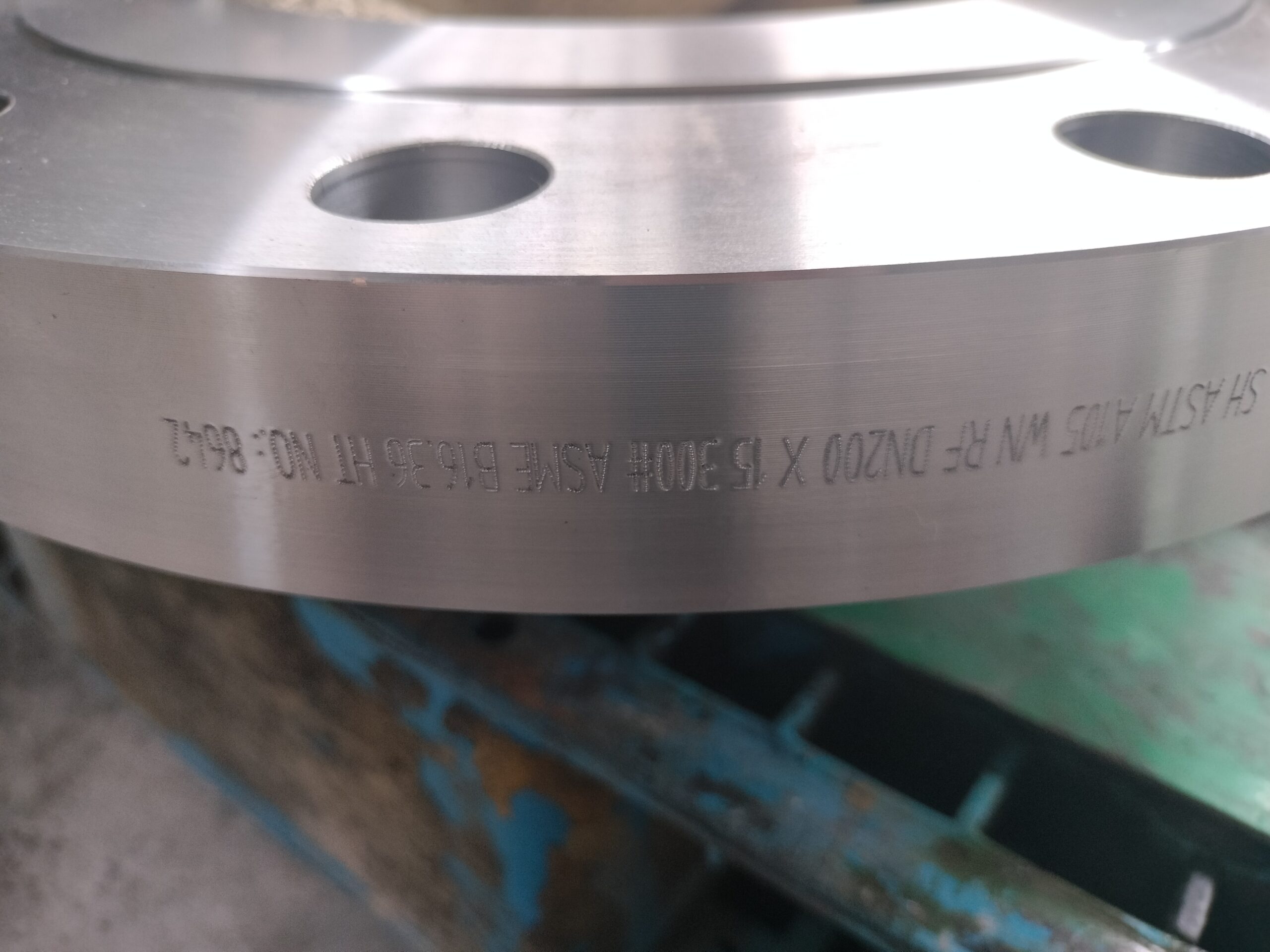
For Indonesian oil & gas, refinery, and power projects, ASTM A105 carbon steel flanges are the default workhorse for ambient- and elevated-temperature service. This guide covers what Indonesian buyers need to specify, document, and verify — written from a supplier’s perspective so you can avoid the costly mistakes we see most often.
What Is ASTM A105?
ASTM A105 is a carbon steel forging grade used for flanges, forged fittings, and valves in ambient-to-elevated temperature service (up to about 427 °C / 800 °F). It is the economical, weldable choice for the bulk of process piping. The specification itself is maintained by ASTM International.
Note: A105 is not intended for cryogenic service. Below about −29 °C, switch to A350 LF2 (covered below).
Flange Types & ASME Dimensions
Most Indonesian projects call flanges to ASME B16.5 (½”–24″) and ASME B16.47 (up to 60″). Common types:
- Weld Neck (WN) — for high-stress, cyclic, or thermal service.
- Slip-On (SO) — economical, easier fit-up.
- Blind (BL) — for closing a line.
- Socket Weld (SW) — small-bore, high-pressure.
- Threaded (TH) — low-pressure, non-weldable locations.
- Lap Joint (LJ) — with a stub end, for frequent dismantling.
See ASME for the governing dimension and facing standards (RF, FF, RTJ).
Pressure Classes
A105 flanges run from 150# to 2500#. The right class follows your piping code (typically ASME B31.3 for process, B31.4 for pipelines) and the design pressure/temperature. Don’t let a supplier “upgrade” class to move slow stock — match the spec.
Documentation Indonesian Operators Expect
This is where most import packages fail audit. For A105 flanges into Indonesia you should expect:
- Mill Test Certificate per EN 10204 3.1 as standard; 3.2 (with third-party inspection) for critical or operator-named packages.
- NACE MR0175 / ISO 15156 compliance where the service is sour — verified via the MTC chemistry.
- Heat treatment and full heat-number traceability linking every flange to its certificate.
For sour-service requirements, the AMPP / NACE resources are the reference.
Indonesia-Specific Notes
- SNI marking may be required depending on product category and end-use — confirm early with your customs broker.
- Customs paperwork: commercial invoice, bill of lading, MTC, and certificate of origin must be consistent on heat numbers and quantities.
- Major operators (Pertamina, Medco, and their EPCs) frequently demand 3.2 MTC + third-party inspection — budget lead time for it.
A105 vs A350 LF2
| ASTM A105 | ASTM A350 LF2 | |
| Service temp | Ambient to ~427 °C | Down to −46 °C (impact-tested) |
| Use | General process piping | Low-temp / offshore topside |
| Cost | Lower | Higher (impact testing) |
If your line sees sub-zero or offshore cryogenic duty, LF2 is the correct call — not A105.
How to Vet an A105 Flange Supplier
- Demand the MTC before PO — a serious supplier already holds it from the mill.
- Confirm multi-mill stock — allocation at one mill shouldn’t stall your job.
- Ask for real references — which Indonesian projects they actually supplied, with grades and docs, not vague “we manufacture.”
- Check the paper trail — EN 10204 compliance, heat numbers, NACE where applicable.
Related Reading
- Back to the Piping Materials Buying Hub for Indonesia
- Super Duplex 2507 Pipe Fittings for Offshore Indonesia
- A193 B7 Stud Bolts & Nuts for Indonesian Projects
Sourcing A105 flanges for an Indonesian project? Send us your sized, class, and facing list and destination port. We’ll return available mills, realistic lead time, and a traceable MTC/EN 10204 package. Request a quote or WhatsApp us for a fast turnaround.